

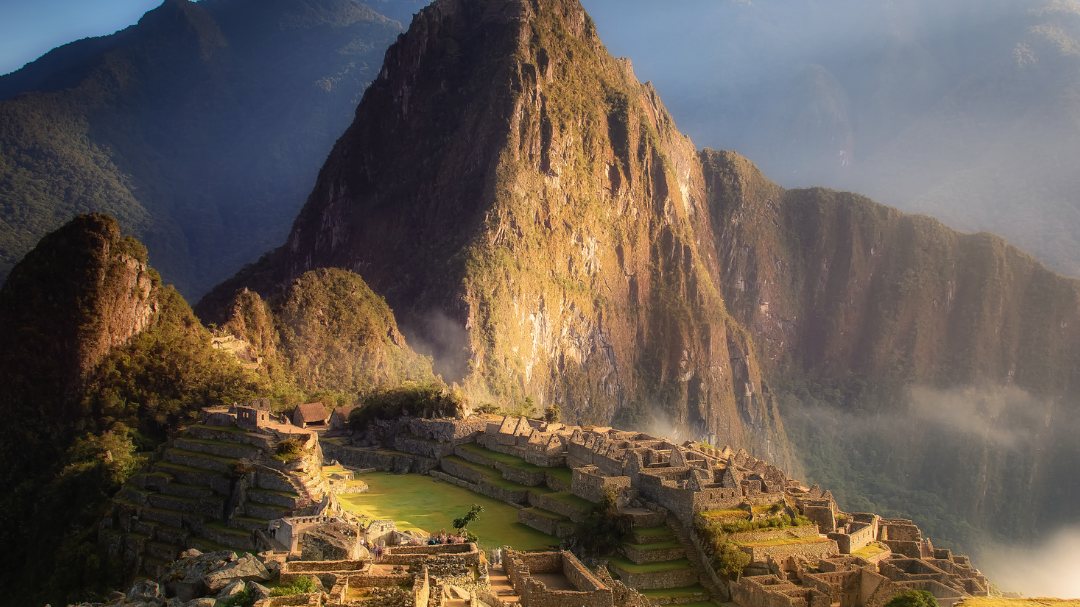
Destination
Peru
Machu Picchu, the Sacred Valley and the Salkantay pass — and the desert most Peru itineraries drive straight past.
Short answer
Peru is a 5-day trip minimum if you fly straight to Cusco, and 8–10 days if you want Lima and the southern desert as well. Machu Picchu entries are capped daily and sell out months ahead in high season, so this is not a destination you improvise. April to October is the dry season; the Inca Trail closes every February. Cusco sits at 3,400 m — higher than Quito — which is why the order of your days matters more here than almost anywhere.
Quick facts
- Machu Picchu
- Daily visitor capacity is capped — entries sell out in high season
- Cusco
- 3,400 m. Higher than Quito. Plan the first day accordingly
- Dry season
- April–October. The Inca Trail closes every February
- Currency
- Peruvian sol (PEN). US dollars accepted unevenly
- From Ecuador
- Quito–Lima is about 2 h; Lima–Cusco about 1 h 20
- Days needed
- 5 minimum for Cusco · 8–10 to add Lima and the desert
We are an Ecuador DMC and inbound tour operator: we design the trip, contract every part of it and coordinate it as the responsible party on the ground, working with a selected network of lodges, drivers, guides and specialist operators. In Peru that network is the established Cusco and Lima operators we have worked with for years. We are not going to claim we own a fleet anywhere. If you want to know exactly who runs which leg, ask us and we will tell you by name.
Peru is not the only country we sell alongside Ecuador. The other is Colombia, and it works the same way: we plan and sell the trip, a Colombian partner runs the ground.
The four Perus, and how long each needs
| Where | What it is for | Days |
|---|---|---|
| Cusco & the Sacred Valley | Machu Picchu, Ollantaytambo, Pisac, Moray, the Maras salt pans. The reason almost everyone comes. | 4–5 |
| Lima | The pre-Inca Huaca Pucllana, the colonial centre, and the food — which is a genuine reason to stop rather than a consolation. | 1–2 |
| The southern desert | The Ballestas Islands, the Nazca Lines from the air, the Huacachina dunes. | 2–3 |
| The Amazon at Iquitos | A canopy walkway, pink and grey river dolphins, and a city you can only reach by air or river. | 4 |
Machu Picchu: what actually constrains your trip
Machu Picchu is not a place you decide to visit next week. Entry is capped daily and allocated by circuit and time slot; the train has limited seats; and Aguas Calientes has a finite number of beds. In high season, the good combinations of those three go months ahead.
- Book early or take what is left. Four to six months out is normal for June–September.
- The circuit matters. Not every ticket lets you walk the same route through the site, and the classic postcard viewpoint is not on every circuit.
- Huayna Picchu and Machu Picchu Mountain are separate tickets with their own tiny quotas.
- The train is the only way in unless you walk. There is no road to Aguas Calientes.
Altitude: Cusco is higher than Quito
At 3,400 m, Cusco is 550 m above Quito, and most itineraries fly you straight into it from sea level in Lima. That single jump is where most Peru trips go wrong.
Everything we build keeps the first Cusco day light, puts the Sacred Valley — 600 m lower — before Machu Picchu, and never schedules a trek start within 48 hours of arrival. Machu Picchu itself, at 2,430 m, is the easiest breathing of the trip.
Our Peru programmes
- 5-Day Machu Picchu & Sacred Valley — easy to moderate, price on request.
- 6-Day Luxury Peru Experience — moderate, price on request.
Also on our books, quoted on request: 6-Day Lima, Cusco & Machu Picchu, 5-Day Salkantay Trek to Machu Picchu, 8-Day Magic Peru: Lima, Nazca, Cusco & Machu Picchu, 4-Day Ceiba Tops Amazon Lodge, Iquitos.
Straight answers
Peru — questions people ask
How many days do you need in Peru?
Five days covers Cusco, the Sacred Valley and Machu Picchu without rushing, provided you fly straight to Cusco. Six adds Lima. Eight lets you take in the southern desert — Ballestas, the Nazca Lines, Huacachina — before turning inland.
Do you need to book Machu Picchu in advance?
Yes. Daily entry is capped and allocated by circuit and time slot, and the popular slots go months ahead in high season. This is not a place you can turn up at. Train seats sell out on the same pattern, and the Hiram Bingham luxury service goes earliest.
Is the altitude in Cusco a problem?
Cusco sits at 3,400 m — 550 m higher than Quito and higher than most people have slept. Machu Picchu, at 2,430 m, is actually a relief. The fix is sequencing: an easy first day in Cusco, then the Sacred Valley at 2,800 m, and Machu Picchu after you have adjusted. Any itinerary that lands you in Cusco and puts you on a mountain the next morning was designed by someone who has not had altitude sickness.
Inca Trail or Salkantay?
The Inca Trail arrives at Machu Picchu through the Sun Gate and requires a permit booked many months ahead; it closes every February. Salkantay is higher, emptier, needs no permit, and crosses from glacier to cloud forest in three days — but day two is 22 km over a 4,650 m pass and it is genuinely hard. If you want the arrival, take the Inca Trail. If you want the walk, take Salkantay.
What is the best time to visit Peru?
April to October is the Andean dry season and the right window for Cusco, the Sacred Valley and any trekking. January to March is the wettest period, and the Inca Trail closes in February for maintenance. The coast and the Amazon follow different patterns — the desert around Nazca and Ica is dry year-round.
Can you combine Peru and the Galápagos?
Yes, and it is the most-requested combination we handle. Ten days is the practical minimum: Peru first while you still have energy for altitude, a travel day through Lima to Quito, then the islands. Doing it the other way round means arriving at Machu Picchu after a week of early boats.
Read before you book
The parts that decide the trip
The Galápagos
The other half of the classic South America trip, and the one we operate ourselves.
Read →Machu Picchu + Galápagos in 10 days
Both, sequenced so the connections work and the paperwork is done before you land.
Read →When to go
Two Galápagos seasons and what each one is good at, the Andes rule, whale dates, and the months to avoid.
Read →Is Ecuador safe?
If you are routing through Ecuador, read this first. It is the honest version.
Read →Let's build this around your dates.
Tell us what you want to see and a planner in Cuenca will put together a routing that works — with real dates, real availability and the fees shown separately.
Plan your trip