

Galápagos wildlife
The animals, and where you actually stand to see them
Most wildlife guides tell you a species exists. This one tells you which island, which site, and what that place is like when you get there — because we run these trips.
Why this exists
The Galápagos is the only place on Earth where wild animals do not move away from you. They evolved without land predators, so a sea lion will sleep on the bench beside you and a marine iguana will not break stride. That is the experience. This guide covers what you will meet, and exactly where.
Reptiles

Galápagos giant tortoise
Chelonoidis spp.
The word "Galápagos" comes from an old Spanish word for saddle — named after the shape of the tortoises’ shells, not the other way round.
Where to see it →
Marine iguana
Amblyrhynchus cristatus
It shrinks. In a bad El Niño year a marine iguana can lose up to 20% of its body length — bone included — and grow it back when the algae returns.
Where to see it →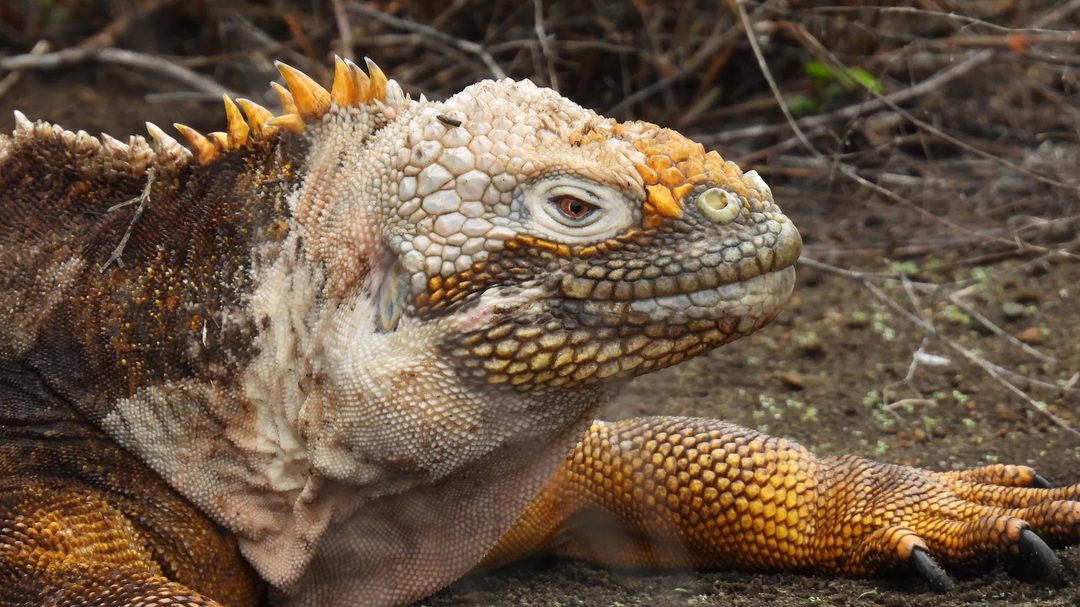
Galápagos land iguana
Conolophus subcristatus
There is a pink one. On the rim of Wolf Volcano on Isabela lives a species of land iguana that is genuinely pink, was not recognised as distinct until 2009, and split from the others several million years ago — before most of the islands it could have lived on even existed.
Where to see it →Mammals

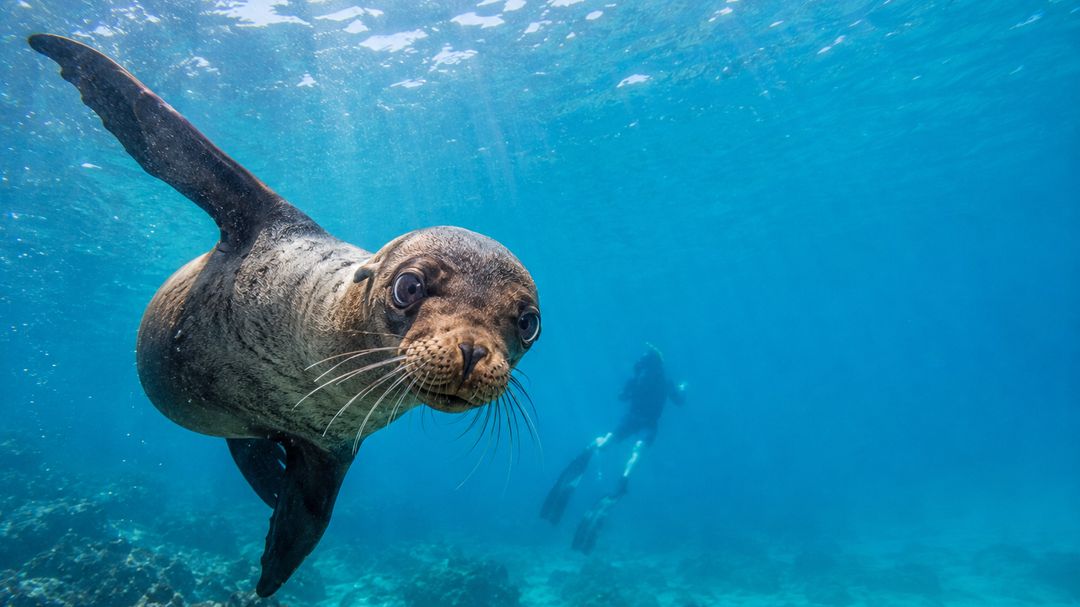
Galápagos sea lion
Zalophus wollebaeki
They took the benches. In Puerto Baquerizo Moreno the sea lions sleep on the public seating, the pier steps and sometimes the moored boats — and the town works around them, not the other way round.
Where to see it →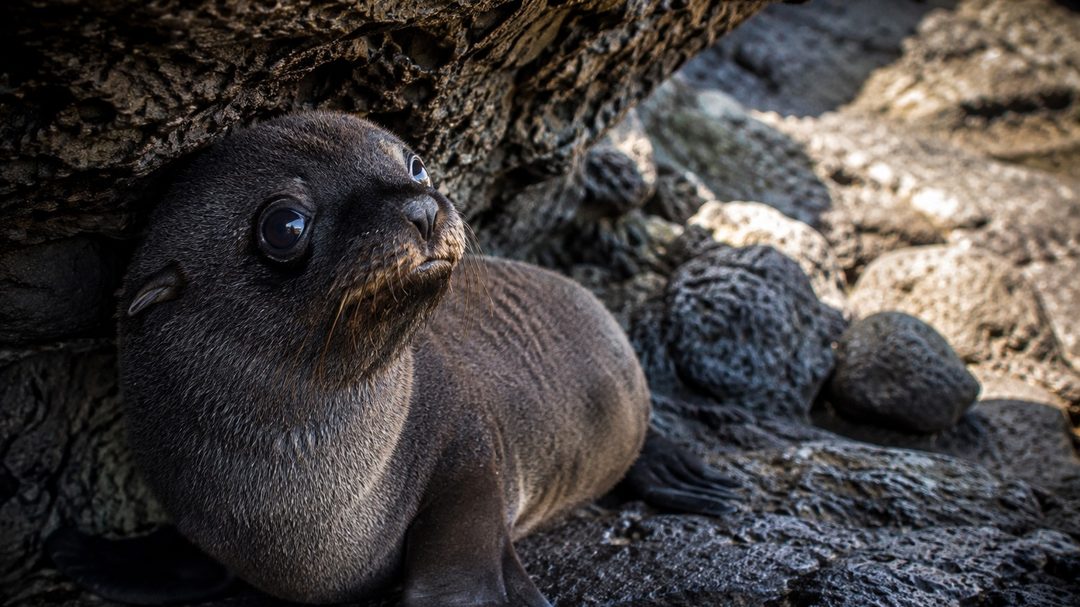
Galápagos fur seal
Arctocephalus galapagoensis
They were declared extinct, twice. Nineteenth-century sealing was so thorough that the species was written off, and both times a small surviving colony was found later on rough coast nobody had bothered to land on.
Where to see it →Birds

Galápagos penguin
Spheniscus mendiculus
It is the only penguin you can see from the northern hemisphere. The equator cuts through northern Isabela, and penguins fish on both sides of it.
Where to see it →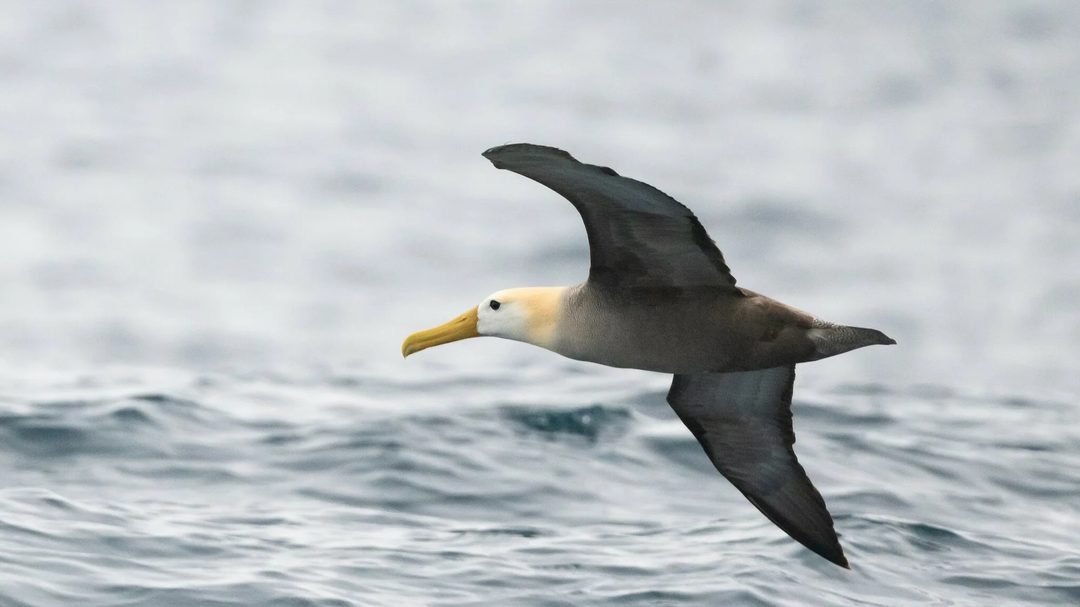
Waved albatross
Phoebastria irrorata
They build no nest at all. The egg is laid on bare ground and the parents shuffle it around as they take turns incubating — sometimes fifty metres from where it started. A significant number are simply lost down cracks in the lava.
Where to see it →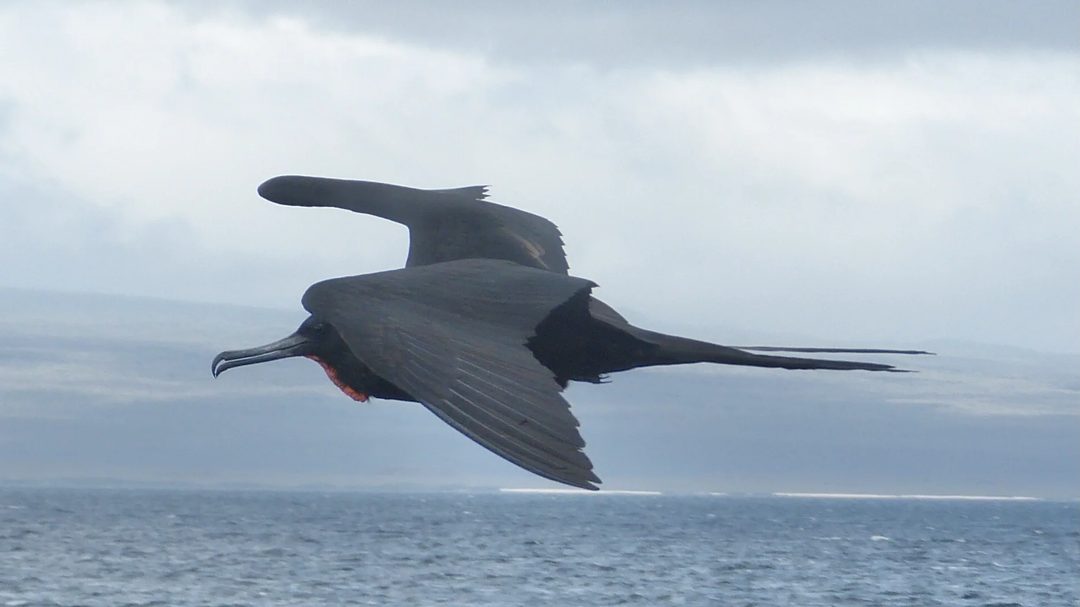
Magnificent frigatebird
Fregata magnificens
Its skeleton weighs less than its feathers. Frigatebird bones account for around five percent of body weight, the lowest of any bird, which is how a 2.3 metre wingspan flies on barely a kilogram.
Where to see it →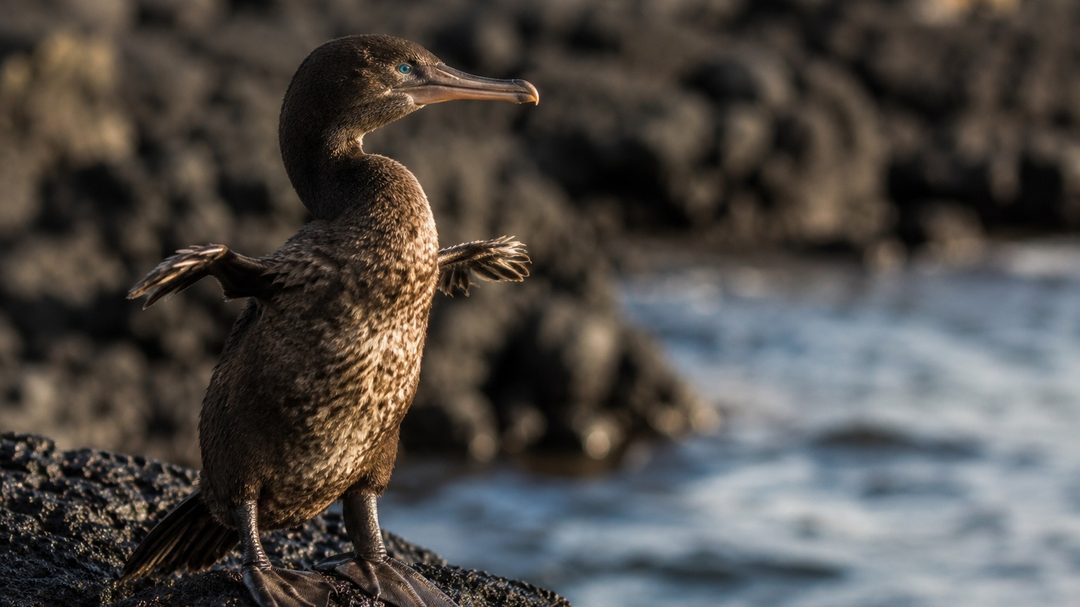
Flightless cormorant
Nannopterum harrisi
It still dries its wings after every dive. Those wings have not flown for hundreds of thousands of years and cannot hold enough water to matter — the bird simply inherited the gesture and never stopped. It is the clearest piece of evolutionary leftovers you can watch happening.
Where to see it →
Blue-footed booby
Sula nebouxii excisa
The name has nothing to do with the feet. It comes from the Spanish bobo — fool — because the birds were so unafraid of sailors that they were trivially easy to catch.
Where to see it →Galápagos hawk
Buteo galapagoensis
A female Galápagos hawk can have up to seven mates at once, and every one of them helps raise the chicks. It is one of the few birds anywhere that breeds this way, and it exists because on a small island with fixed territories, sharing a female beats holding no territory at all.
Where to see it →Marine life

Green sea turtle
Chelonia mydas agassizii
They are called green for the colour of their fat, not their shell — a name given by the people who used to eat them.
Where to see it →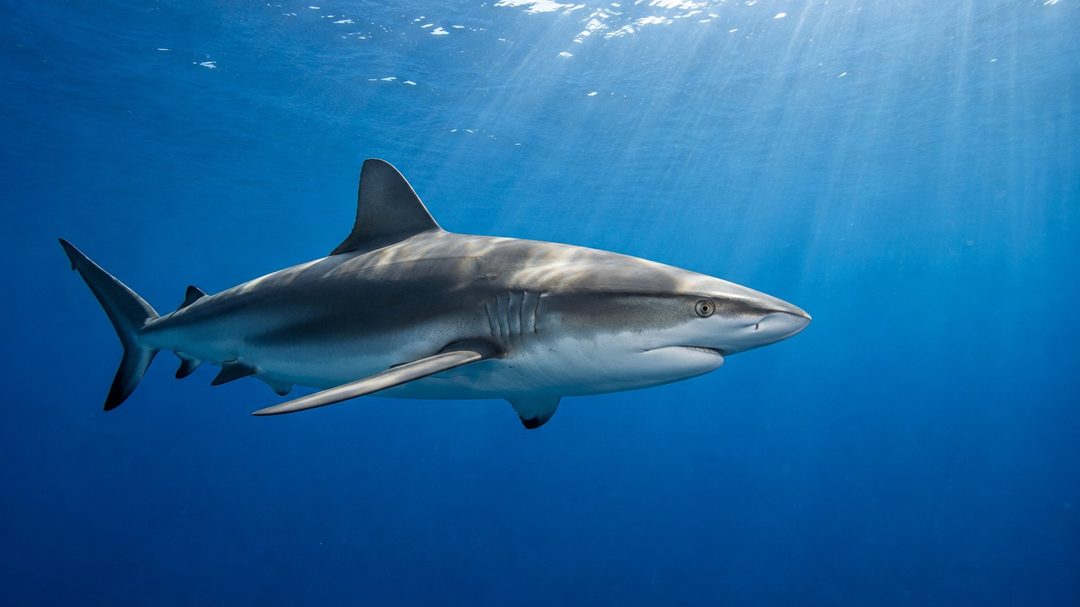
Galápagos shark
Carcharhinus galapagensis
It is named after the Galápagos because that is where science first described it, not because it lives only here. It is found around isolated tropical islands worldwide — and almost never near a continental coast, which is why most people have never heard of the commonest large shark they will ever swim with.
Where to see it →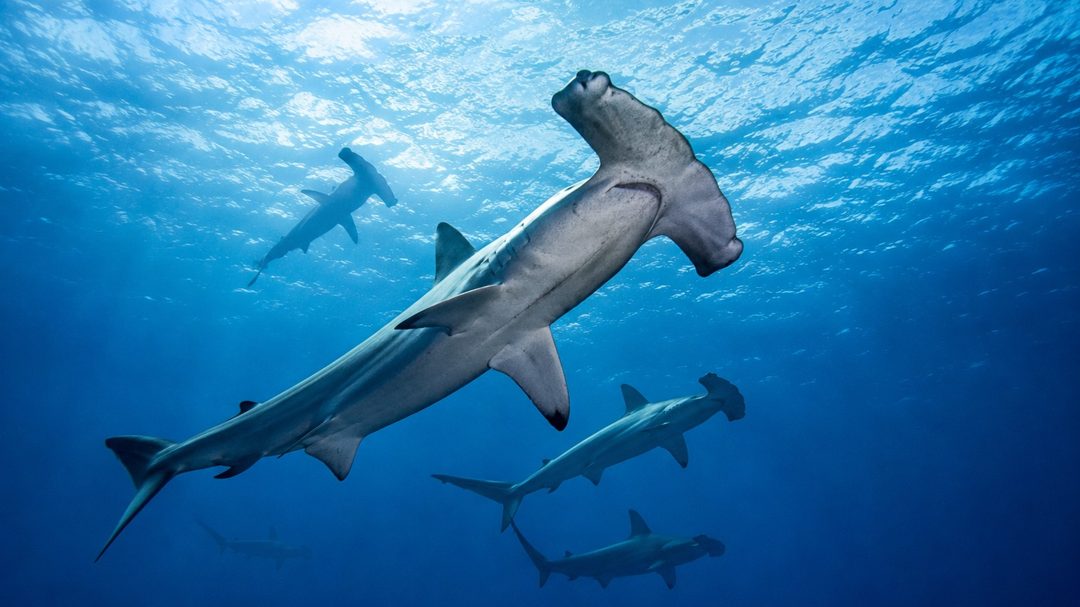
Scalloped hammerhead
Sphyrna lewini
They school by day and hunt alone at night, which is backwards for a shark. Nobody is certain why. The leading explanation is that the schools are about mate selection rather than feeding — the largest females hold the centre.
Where to see it →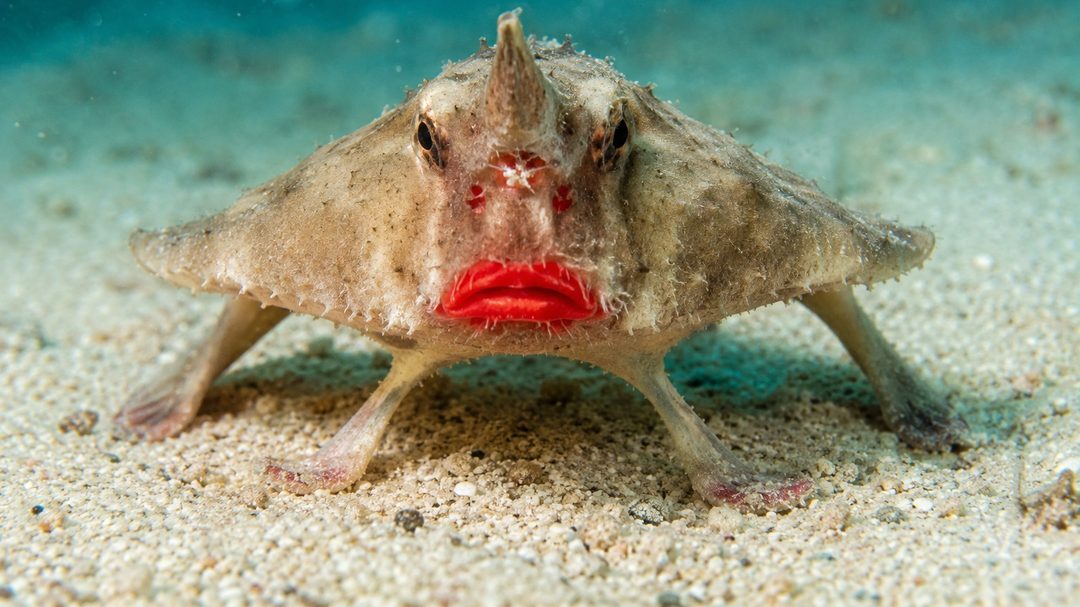
Red-lipped batfish
Ogcocephalus darwini
It cannot really swim. It walks on the sea floor on fins that work like legs, and if you startle it, it does a short, awkward hop and then walks again. It is one of very few fish that has essentially given up on swimming.
Where to see it →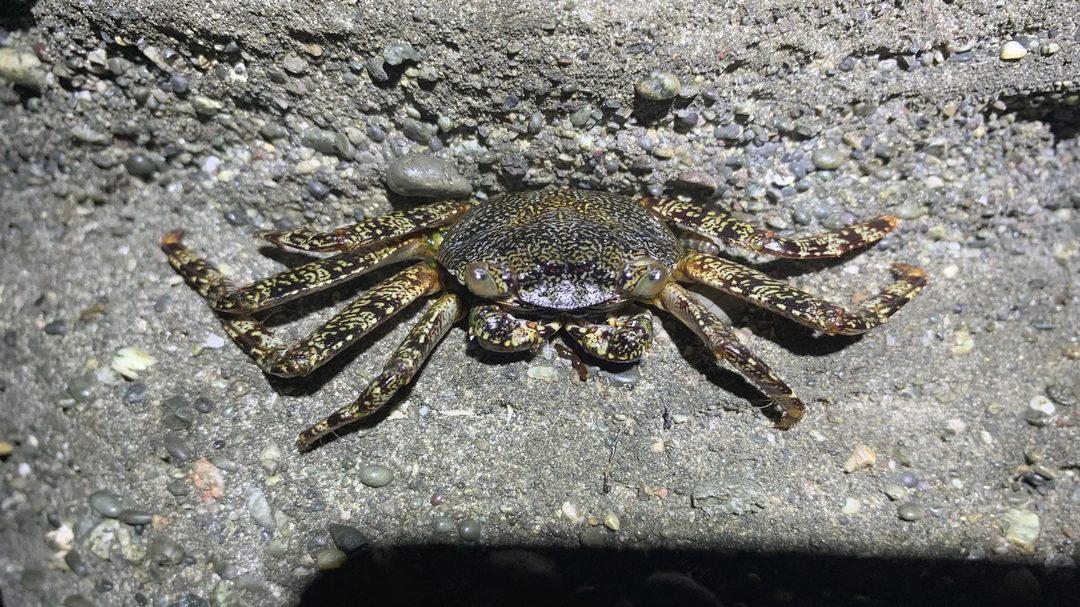
Sally Lightfoot crab
Grapsus grapsus
John Steinbeck spent pages on them. In The Log from the Sea of Cortez he describes trying and repeatedly failing to catch one, and concludes that they seem able to run in any of four directions at once and to read the mind of whoever is chasing them.
Where to see it →We are writing these one at a time and checking every figure rather than publishing a hundred thin pages. If there is a species you want covered next, tell us and we will move it up.
Straight answers
Galápagos wildlife, answered
What animals can you only see in the Galápagos?
The marine iguana, the Galápagos giant tortoise, the flightless cormorant, the Galápagos penguin and the Galápagos sea lion are all endemic — they exist nowhere else on Earth. Roughly 80% of the land birds and 97% of the reptiles are endemic too.
Do you need a guide to see Galápagos wildlife?
At every National Park visitor site, yes, and it is the law rather than an upsell: a Park-licensed naturalist must accompany you. In the towns and on a handful of public beaches you can walk freely, and you will still meet sea lions and marine iguanas.
How close can you get to the animals?
Two metres is the rule, and the animals do not know it. They evolved without land predators, so they will not move away from you — which means the responsibility for keeping distance is entirely yours.
What is the best month for Galápagos wildlife?
There is no bad month, only different ones. December to May is warm with calm, clear water — better for snorkelling and for anyone nervous about boats. June to November is cool and rough, and the cold current brings the richest marine life of the year.
Is the wildlife the same on every island?
No, and that is the whole point of the place. Species diverged island by island, which is what Darwin was shown. The land iguana on Santa Fé is a different species from the one on Santa Cruz, and the tortoises differ from volcano to volcano on Isabela.
