

Santa Cruz Island
Short answer
Santa Cruz is the centre of the Galápagos: the biggest town, the most beds, the boat connections to every other inhabited island, and the airport most people fly into — though that airport is on Baltra, a separate island, about ninety minutes away. It holds the Charles Darwin Research Station, the archipelago’s most reliable place to see wild giant tortoises in the highlands, and Tortuga Bay, which you reach on foot. If you have five days, you will sleep here.
On this page — 8 sections
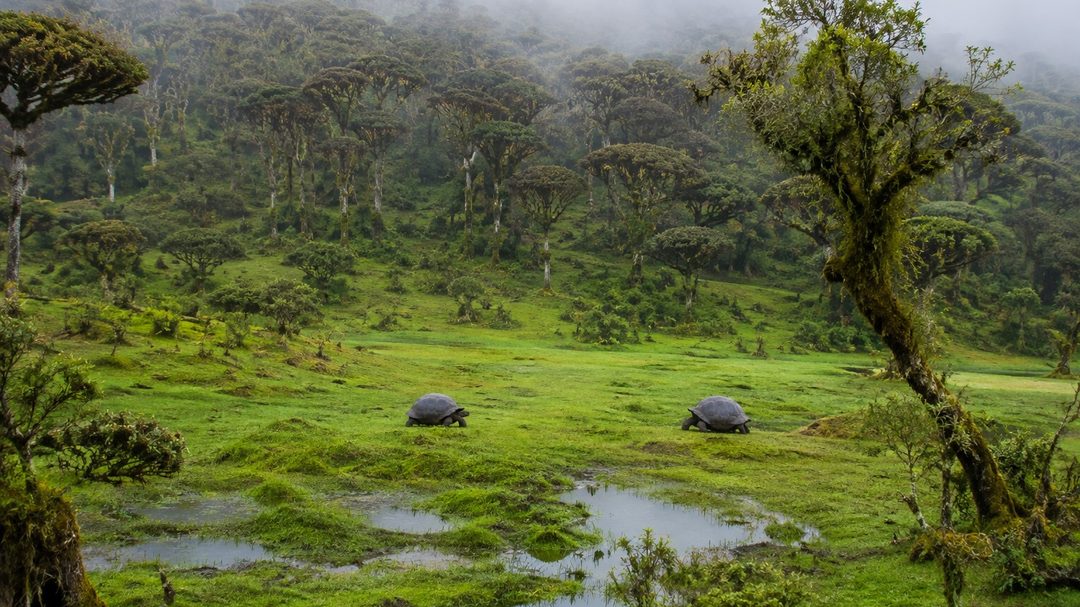
The tortoises in the Santa Cruz highlands are nobody’s. They are wild, they wander across roads and through farm gates as they please, and the farms simply charge you to walk among them. It is the least managed great wildlife encounter on Earth.
Santa Cruz at a glance
| Also called | Indefatigable Island |
|---|---|
| Population | Around 15,000 — the largest town in the archipelago |
| Settlement | Puerto Ayora |
| Airport | Not on the island. Baltra (GPS) is across a channel, ~90 min away |
| Connections | Speedboats to Isabela, San Cristóbal and Floreana |
| Best known for | The Darwin Station, highland tortoises and Tortuga Bay |
Getting there
This is the part that decides whether Santa Cruz belongs in your trip, so it goes first rather than last. How you reach the archipelago at all →
- Fly to Baltra (GPS)
- The busiest route into the archipelago. But Baltra is a different island: shuttle bus, ferry across the Itabaca Channel, then forty-five minutes of road. Budget ninety minutes to two hours to reach a hotel.
- Speedboat from Isabela or San Cristóbal
- About two hours from either, generally two departures a day. Santa Cruz is the hinge — there is no direct service between Isabela and San Cristóbal.
- Cruise
- Almost every cruise itinerary starts or ends here, and most call at the Darwin Station.
What is on the island
- 1
The highlands — El Chato and the private reserves
Wet green pasture where wild tortoises graze, unfenced and unbothered. The single most reliable tortoise sighting in the archipelago, and the only one where the animals are not in an enclosure.
- 2
Charles Darwin Research Station
The breeding centre at the edge of town: hatchlings, corrals of juveniles being raised to a size predators cannot take, and Lonesome George on display. Walkable from Puerto Ayora.
- 3
A long white beach at the end of a paved path from town — about forty-five minutes on foot, no guide, no fee. Marine iguanas on the sand, a sheltered lagoon at the far end for swimming.
- 4
A flooded fissure between two lava walls, reached by a water taxi and a short walk. Cold, clear, deep, and busy in the middle of the day.
- 5
A mangrove lagoon entered by panga with the engine off — turtles, rays and juvenile sharks in still water. Boat access only.
- 6
A quieter beach on the east side with a flamingo lagoon behind it. Needs a taxi, which is exactly why it is quiet.
- The highlands — El Chato and the private reserves
- Wet green pasture where wild tortoises graze, unfenced and unbothered. The single most reliable tortoise sighting in the archipelago, and the only one where the animals are not in an enclosure. What it is really like →
- Charles Darwin Research Station
- The breeding centre at the edge of town: hatchlings, corrals of juveniles being raised to a size predators cannot take, and Lonesome George on display. Walkable from Puerto Ayora. What it is really like →
- Tortuga Bay
- A long white beach at the end of a paved path from town — about forty-five minutes on foot, no guide, no fee. Marine iguanas on the sand, a sheltered lagoon at the far end for swimming. What it is really like →
- Las Grietas
- A flooded fissure between two lava walls, reached by a water taxi and a short walk. Cold, clear, deep, and busy in the middle of the day. What it is really like →
- Black Turtle Cove
- A mangrove lagoon entered by panga with the engine off — turtles, rays and juvenile sharks in still water. Boat access only. What it is really like →
- Day trips from here
- Santa Cruz is the launch point for almost every outer-island day trip: North Seymour (20 minutes, the best half-day in the islands), Santa Fé, Bartolomé, Santiago and Floreana.
- El Garrapatero
- A quieter beach on the east side with a flamingo lagoon behind it. Needs a taxi, which is exactly why it is quiet. What it is really like →
Every visitor site we have written up →
The history, which is the point
Most Galápagos islands are wildlife and geology. Santa Cruz is those, plus two hundred years of people behaving strangely on a small piece of rock.
- 1930sNorwegian and German settlers arrive to farm the highlands. Their descendants still run some of the farms you walk through to see the tortoises.
- 1959Ecuador declares the archipelago a national park and the Charles Darwin Foundation is created. The research station at Puerto Ayora follows in 1964.
- 1971A lone tortoise is found on Pinta, an island thought stripped of them. Lonesome George is brought to Santa Cruz and becomes the most famous animal in conservation.
- 2012George dies without offspring. His subspecies ends with him. He is on display at the station — deliberately, as an argument rather than a trophy.
What you see
- Galápagos giant tortoise — Wild in the highlands, and at the breeding centre in town. Both are worth doing; they are not the same experience.
- Marine iguana — Along the Tortuga Bay sand and the Puerto Ayora shoreline, often piled on each other for warmth.
- Green sea turtle — Tortuga Bay lagoon and Black Turtle Cove; nesting tracks on the north-shore beaches from December.
- Galápagos sea lion — On the pier, the benches and occasionally the boats. Nobody moves them.
- Darwin’s finches — Easiest in the highlands and at the station. Thirteen species, and telling them apart is genuinely hard — which is the point of the story.
Every species, with the exact sites →
Staying over
Puerto Ayora has the widest choice in the archipelago: hostels, comfortable mid-range hotels and a few genuinely good ones, plus the only real restaurant scene. It is also the only place that feels like a town rather than a village. If you want quiet, sleep on Isabela and use Santa Cruz as the hinge.
What we would tell you first
Arrival day is a travel day
Landing at Baltra leaves you ninety minutes to two hours from a bed, after the park fee queue and a second biosecurity check. Do not book anything for that afternoon.
It is the busiest island, and it feels it
Puerto Ayora is a working town of fifteen thousand people. If your picture of the Galápagos is empty beaches and no one else, that picture is Isabela or a cruise, not here.
The highland tortoises depend on the season
They move to the wet highlands in the cool season and disperse when it is dry. The reserves are reliable year-round, but "hundreds in a field" is a June-to-December sight.
The islands you can stay on
- Floreana — Floreana: the post barrel that has worked since 1793, the 1930s disappearances nobody solved, Devil’s Crown, and the honest problem of getting there.
- Isabela — Isabela: bigger than all the other islands put together, 5 volcanoes, around 2,000 residents and sand for streets. Two hours by speedboat from Santa Cruz.
- San Cristóbal — San Cristóbal: the capital, around 7,000 people, the first island Darwin set foot on in 1835, and the only one where the airport is 10 minutes from town.
All eleven compared, side by side →
Trips that reach Santa Cruz
- 5-Day Galápagos: Santa Cruz & Isabela 5 days · from US$1,337
- 8-Day Galápagos: San Cristóbal, Santa Cruz & Isabela 8 days
- 6-Day Luxury Galápagos 6 days
None of them quite it? Tell us what you want and we build it →
Questions people also ask
What is there to do on Santa Cruz Island?
The highlands for wild giant tortoises, the Charles Darwin Research Station for the breeding programme and Lonesome George, and Tortuga Bay — a long white beach forty-five minutes on foot from town, with no fee and no guide required. Add Las Grietas, Black Turtle Cove and El Garrapatero if you have a third day.
Is the Galápagos airport on Santa Cruz?
No, and this catches people out. Seymour Airport (GPS) is on Baltra, a separate uninhabited island. Getting to Puerto Ayora means a shuttle bus, a ferry across the Itabaca Channel and about forty-five minutes of road — ninety minutes to two hours in total.
How many days do you need on Santa Cruz?
Two full days covers the highlands, the station and Tortuga Bay properly. Three lets you add a day trip — Bartolomé, Santa Fé, North Seymour or Floreana — without cutting anything short.
Can you see giant tortoises for free on Santa Cruz?
Not quite free, but close: the highland farms charge a small entry fee to walk their land, and the tortoises there are genuinely wild — they come and go as they please. It is the most reliable tortoise sighting in the archipelago and the only one that is not an enclosure.
Do you need a guide on Santa Cruz?
For most of the archipelago yes, by law. Santa Cruz is one of the exceptions: Tortuga Bay, Las Grietas, the Darwin Station and the town beaches can all be visited independently. Boat sites and most day trips still require a licensed naturalist.
Is Santa Cruz or Isabela better?
Different jobs. Santa Cruz has the connections, the choice of hotels, the tortoises and the food. Isabela is quieter, wilder and has the better easy snorkelling. Most five-day trips do both, and the honest answer is that Santa Cruz is where you have to sleep and Isabela is where you want to.
Sources
Every figure on this page comes from one of these. If one of them changes and we have not caught up, tell us and we will fix it the same day.
- Galápagos National Park Directorate — Visitor sites, landing rules and which islets are closed to landings.
- Galápagos Conservation Trust — Independent conservation reporting, including the Floreana restoration programme.
- Ecuador Ministry of Tourism — service portal — Ecuador’s register of licensed operators — where our own licence is listed.
Planning this trip yourself?
Send us the dates and what you actually want to see. A planner in Cuenca reads it and replies within one business day — not a template, and not a bot.
Plan your trip